SECOPTA FiberLIBS Inline PMI: Fully Automated Positive Material Identification
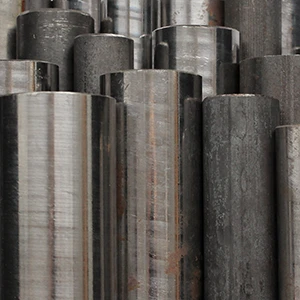
FiberLIBS checks the identity of long products — billets, bars, and tubes — by chemical composition, inline at up to 2 m/s in the inspection line or offline at the product’s end face. Fully integrated surface preparation, results in seconds, and automatic OK / Not-OK signals to your Level 2 system make mix-up control 100% automatic and 100% traceable.
With frequent material changes and a constantly growing number of material classes, Positive Material Identification (PMI) matters more every year. Today’s PMI approaches each have a shortcoming: some need maintenance-intensive sample preparation, some cannot detect light elements like carbon, some emit ionizing radiation, and most depend on manual labor because they cannot be automated.
The SECOPTA FiberLIBS inline PMI sensor overcomes those limits with laser-induced breakdown spectroscopy. It identifies bars in finishing and NDT lines right before shipment, and checks billets and ingots before they enter the reheating furnace — already running in multiple steel producers’ facilities. Integrated, fully automated surface preparation (adjustable from 3 µm to 400 µm) removes oil and dirt on bright bars as well as scale and decarburized zones on billets, so the measurement reflects the true heat/melt-shop chemistry.
Results and OK / Not-OK signals are transmitted automatically to Level 2 or your MES, guaranteeing uninterrupted documentation and 100% traceability. Personnel who used to run manual PMI can move to higher-value work — plant operators have reported shifting more than €300,000 of labor capacity into efficiency-enhancing jobs. Built for 24/7 industrial use, the system needs only minimal user maintenance once a week.
Products: Round bar · Tube · Billet · Ingot
Materials: Special, stainless, and other high-alloy steel · Carbon analysis option for low-alloy grades · Aluminum slabs, billets, and semi-finished products
Installation points: Finishing line · NDT line · Before the reheating furnace (stationary material)
Operation: Longitudinally passing material up to 2 m/s or stationary end-face measurement · Laser-safety housing and CE declaration for integration into existing lines · Turnkey solution available
Your advantages: Fully integrated sample preparation · Analysis within seconds · Based on heat/melt-shop values · Removes human-influenced error · Compatible with Manufacturing Execution Systems (MES) · Software package with measuring-device monitoring for audits and certification
- Control unit (W × L × H): 600 mm × 850 mm × 1750 mm
- Measuring head (W × L × H): 270 mm × 550 mm × 120 mm (without scale-layer preparation) · 310 mm × 560 mm × 740 mm (with scale-layer preparation)
- Weight: Control unit 150 kg · Measuring head 115 kg
- Cable length: 2.8 m (2.5 m for C analysis)
- Laser class: 4 (Class 1 possible with laser-safe housing)
- Protection class: IP 56
- Temperature range: +5 °C to +40 °C
- Purging gas: Compressed air
- Communication: Profinet, Ethernet/IP, EtherCAT, Modbus TCP, TCP/IP, UDP, OPC UA, SQL (other protocols and fieldbus systems on request)
- Detectable elements: Mn, Si, V, C, Mo, Ni, Ti, Al and many others
- Detection rate: 98% (up to 99.3% and more depending on produced alloys)
- Certificates: EC (CE certification possible)
- Options: Carbon analysis · Remote service · On-site quick-change spare modules · Laser-safe housing · CE certification · Measuring-device monitoring
Technology overview, integration options, and full technical specifications.
Mix-up control of aluminum billets and slabs, plus in-situ melt analysis.
Videos, application notes, and further reading on secopta.com.